
Roman blinds are one of the most popular and enduring window treatment choices in Australian homes. They combine the clean, structured look of a blind with the softness and warmth of fabric, making them a versatile option that suits a wide range of interiors from contemporary apartments to period-style houses.
If you are considering roman blinds for your home and want to understand exactly what they are, how they work, what styles are available, and where they work best, this guide covers everything you need to know.
What Is a Roman Blind?
A roman blind is a type of window covering made from a single flat panel of fabric that folds up into horizontal sections when raised and hangs flat when lowered. Unlike a roller blind, which rolls the fabric around a tube at the top, a roman blind uses a system of horizontal rods or dowels sewn into the back of the fabric, which cause it to fold neatly into soft horizontal pleats as it is lifted.
When fully lowered, a roman blind sits flat against the window, covering it completely. When raised, it stacks up in a series of overlapping folds at the top of the window, which is what gives roman blinds their distinctive, sculptural appearance. This stacking effect is one of the defining visual characteristics of the style and a key part of their appeal.
The name is thought to derive from ancient Rome, where fabric panels were used to cover openings in buildings and amphitheatres to provide shade. The modern roman blind takes the same basic principle and adapts it into a fully finished, functioning window treatment.
How Do Roman Blinds Work?
Roman blinds operate through a cord or cordless lift mechanism attached to the back of the blind. Traditional corded roman blinds use a series of rings sewn into the back of the fabric through which cords are threaded. When the cords are pulled, the rings draw upward and the fabric folds along the rod lines, stacking neatly at the top.
Cordless roman blinds use a spring-loaded mechanism that allows the blind to be raised or lowered by simply pushing or pulling the bottom rail. This is a particularly practical option for households with young children, where dangling cords present a safety hazard. Cordless operation is increasingly the default recommendation for any blind installed in a room used by children.
Motorised roman blinds are also available and are growing in popularity in Australian homes as part of broader smart home setups. A motorised roman blind can be operated via a remote control, a wall switch, a smartphone app, or integrated with voice assistant platforms. Motorisation is particularly useful for hard-to-reach windows or for households that want consistent light control without manual operation.
Types of Roman Blinds
Not all roman blinds fold in the same way. The style of fold is one of the main points of difference between roman blind types, and each creates a slightly different visual effect when the blind is raised.
Flat Roman Blinds
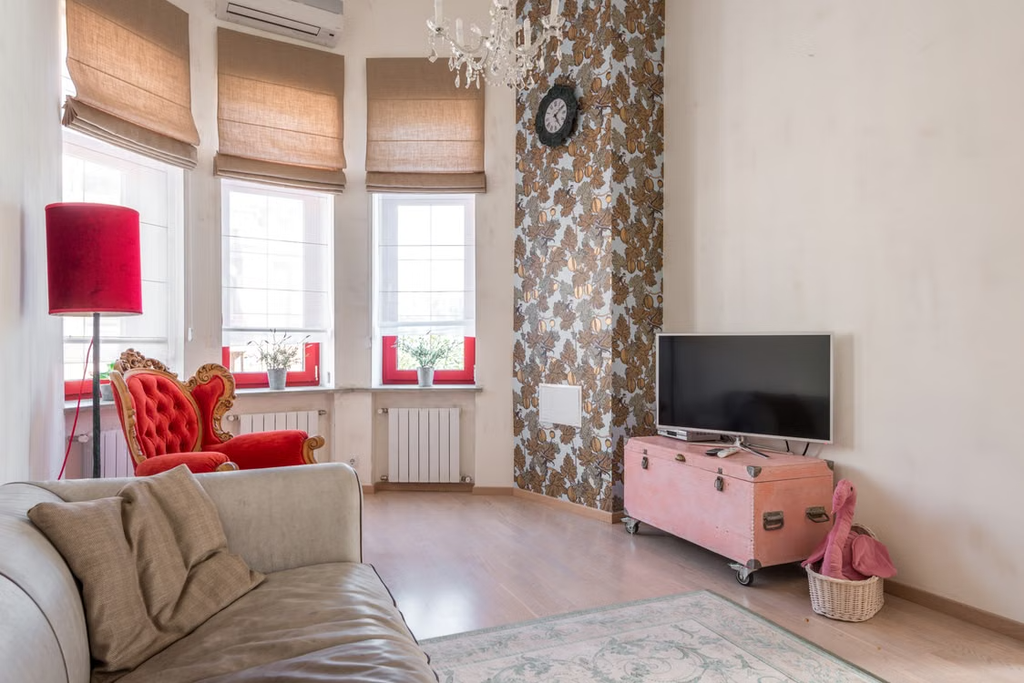
A flat roman blind hangs with a completely smooth, unpleated face when fully lowered. There is no visible fabric fold at the front of the blind; all of the folding hardware sits at the back. When raised, the blind stacks in horizontal folds, but in its lowered position it presents a clean, uninterrupted surface that suits contemporary and minimalist interiors particularly well. Flat roman blinds are the most popular style in current Australian homes because of their clean, unfussy appearance.
Hobbled or Looped Roman Blinds
A hobbled roman blind, sometimes called a looped or classic roman blind, has permanent horizontal folds visible at the front of the blind even when it is fully lowered. These cascading folds give the blind a fuller, more traditional appearance and add an extra layer of depth and texture. Hobbled styles suit more formal or period-inspired interiors and work particularly well in dining rooms and sitting rooms where a sense of occasion and traditional character is the goal.
Relaxed Roman Blinds
A relaxed roman blind has a gentle curve or swag at the bottom edge rather than a straight horizontal hem. This curved bottom gives the blind a softer, more casual look than a flat or hobbled style, and suits relaxed coastal interiors, bedrooms, and informal living spaces where a less structured window treatment feels more appropriate. Relaxed roman blinds are a good choice when the goal is softness and warmth rather than architectural precision.
Waterfall Roman Blinds
A waterfall roman blind is similar to a flat roman blind but folds over itself in a continuous flow rather than stacking in distinct horizontal sections. The result is a smooth, cascading effect when the blind is raised, without the defined horizontal fold lines of a standard flat style. Waterfall roman blinds are often chosen for their particularly elegant, tailored appearance.
What Fabrics Are Used for Roman Blinds?
Roman blinds can be made from a wide range of fabrics, which is one of the reasons they are such a versatile choice. The fabric determines not only the visual character of the blind but also its light-filtering and insulating performance.
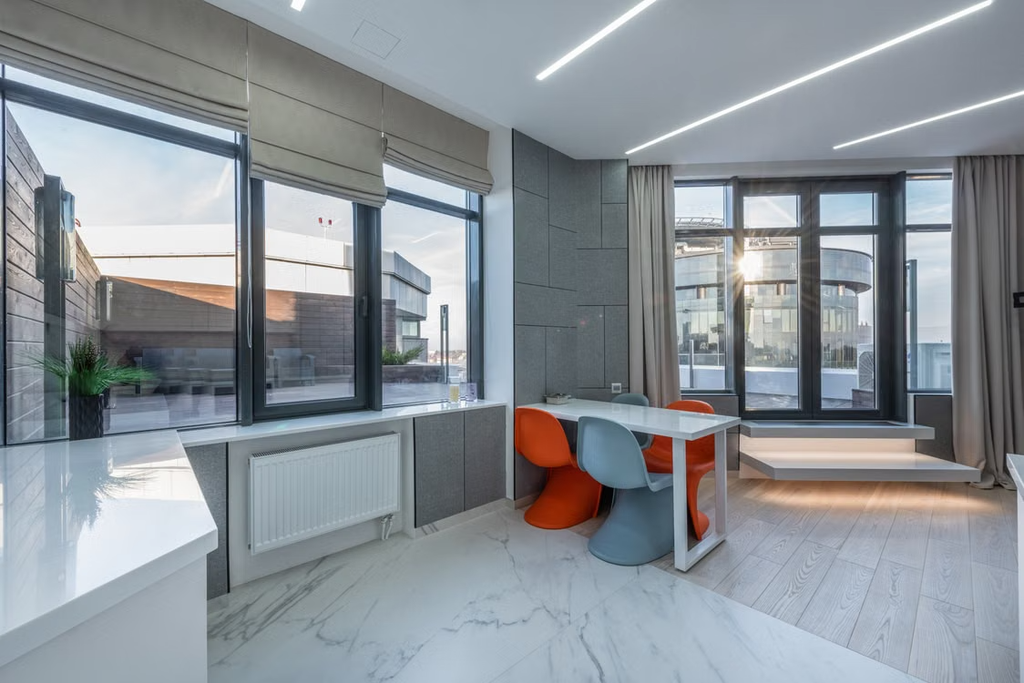
Linen and linen-look fabrics are among the most popular choices for roman blinds in contemporary Australian interiors. They have a natural, textured quality that suits the warm, organic colour palettes currently popular in home design, and they filter light softly without blocking it entirely when used without a lining.
Cotton fabrics offer a crisp, clean look and are available in a wide range of colours and prints. Patterned cotton roman blinds, including botanical prints and geometric designs, can serve as a focal point in a room and are particularly well suited to kitchens, dining spaces, and children rooms where a decorative element is welcome.
Velvet and textured weave fabrics bring a more luxurious and formal character to a roman blind, making them suitable for sitting rooms, home libraries, and bedrooms where a richer, more enveloping atmosphere is the goal. Heavier fabrics also provide better natural insulation, which is a practical advantage in cooler rooms.
Sheer and semi-sheer fabrics can also be used for roman blinds in spaces where light diffusion is more important than privacy or blockout. A sheer roman blind filters natural light beautifully and creates a soft, airy feel that works well in living rooms and sitting areas that receive pleasant afternoon light.
Lined vs Unlined Roman Blinds
Most roman blinds installed by professional workrooms are made with a lining, and for good reason. A lining improves the hang of the blind, helps the fabric fold more neatly, protects the face fabric from UV damage, and provides a more finished appearance from both inside and outside the window.
Standard lining adds body and UV protection without significantly affecting light filtering. Thermal lining adds a layer of insulation that helps regulate room temperature, which is a practical consideration in rooms that receive strong afternoon sun in summer or that feel cold in winter.
Blockout lining prevents light from passing through the fabric entirely, making it the right choice for bedrooms and anywhere that sleep quality or screen glare is a concern. A roman blind with a quality blockout lining can reduce incoming light by close to 100 percent when properly fitted within the window recess.
Unlined roman blinds are sometimes chosen for their lighter, more informal look, particularly in sheer or semi-sheer fabrics where the visual effect of light passing through the fabric is part of the appeal. In these applications, the absence of a lining is an intentional aesthetic choice rather than a cost-saving measure.
Inside Mount vs Outside Mount
Roman blinds can be installed either inside the window recess or outside it, and the choice affects both the look of the finished blind and the measurement approach.
An inside mount roman blind sits within the window recess, flush with the surrounding wall or recessed into the frame. This gives a built-in, architectural look that keeps the window treatment contained and the surrounding wall space clear. Inside mount installation works best when the window recess is deep enough to accommodate the blind mechanism and any lining without the blind sitting proud of the wall.
An outside mount roman blind is fixed to the wall above the window recess, covering the recess entirely. This approach allows a roman blind to be paired with curtain panels on either side, gives the impression of a larger window, and provides more complete light block around the edges of the window. It is also the practical choice when the window recess is too shallow for an inside mount.
Where Do Roman Blinds Work Best?
Roman blinds are an adaptable choice that suits most rooms in a home, though some applications play more strongly to their strengths than others.
Kitchens and dining rooms are among the most natural homes for a roman blind. Their compact profile when raised keeps the window clear for cooking or eating while still providing a decorative fabric element that softens the space. A patterned or textured roman blind in a kitchen or dining room adds personality without the bulk of a full curtain treatment.
Bedrooms benefit from roman blinds with a blockout lining, which can be used as a standalone treatment or paired with curtain panels for a layered look. A roman blind sits neatly inside the window recess and frees up wall space on either side, which is useful in smaller bedrooms where a full curtain stack would feel intrusive.
Living rooms are well suited to roman blinds when the goal is a clean, structured look. Pairing a roman blind inside the recess with linen or sheer side panels creates a layered treatment that offers flexibility across the day without the complexity of a full double-track curtain system.
Bathrooms and laundries are also a good application for roman blinds, provided the fabric is appropriate for moisture-prone environments. PVC-coated fabrics and moisture-resistant materials are available for use in these rooms, and a slim roman blind inside a bathroom window recess is a far more stylish solution than a standard roller blind.
Roman Blinds and Child Safety
If roman blinds are being installed in a room used by children, cord safety is a critical consideration. Corded roman blinds present a strangulation risk for young children, and Australian Standards require that cords be kept out of reach or that safety devices be fitted to prevent free-hanging loops.
The safest options for children rooms are cordless or motorised roman blinds, both of which eliminate the cord hazard entirely. If a corded blind is being installed in a space accessible to children, cord cleats or tensioners should be fitted as a minimum, and cords should be secured well above a child reach.
How to Care for Roman Blinds
Roman blinds are generally straightforward to maintain. For day-to-day care, light dusting with a soft brush attachment on a vacuum or a gentle wipe with a dry microfibre cloth is sufficient to keep the fabric looking fresh. This prevents dust from settling into the fabric folds, which is more of a consideration for hobbled styles with multiple visible pleats.
For more thorough cleaning, the approach depends on the fabric. Some roman blind fabrics can be spot cleaned with a mild detergent and a damp cloth. Others, particularly those with delicate weaves or specialist finishes, require professional cleaning. Checking the fabric care instructions before attempting any wet cleaning is strongly recommended to avoid shrinkage or fabric damage.
Most professionally made roman blinds can be taken down for cleaning without removing the mechanism from the wall, which makes periodic thorough cleaning practical rather than disruptive.
Are Roman Blinds Still in Style?
Roman blinds have been a staple of Australian interiors for decades and continue to perform strongly in current design trends. The shift toward natural fabrics, warm neutral tones, and considered, tactile interiors that is shaping design in 2026 plays directly to roman blinds strengths. Linen-look flat roman blinds in sandy, terracotta, and warm taupe tones are among the most requested window treatments currently, particularly in open-plan living and dining spaces.
Patterned roman blinds are also seeing renewed interest as botanical prints and nature-inspired motifs return to Australian interiors. A roman blind is one of the most effective ways to introduce a print into a room without overwhelming the space, since a single blind panel gives a print enough room to be read properly without the repetition of a full curtain treatment.
Get Expert Advice on Roman Blinds for Your Home
At Peninsula Curtains & Blinds, we supply and install roman blinds across the Mornington Peninsula in a wide range of fabrics, styles, and lining options. Whether you are looking for a flat blockout roman blind for a bedroom, a patterned cotton style for a kitchen, or a relaxed linen option for a coastal living room, our team can help you choose the right fabric and fit it precisely to your window.
Get in touch to arrange a free measure and quote. We will bring fabric samples to your home and help you find the right roman blind for every room.