
Bathrooms ask more of their window coverings than any other room in the home. The window above a bath or beside a vanity needs to block sightlines completely, shrug off steam day after day, and still look considered rather than purely practical. It is a tall order, and it explains why so many bathroom windows end up with a sad, warped blind or nothing at all.
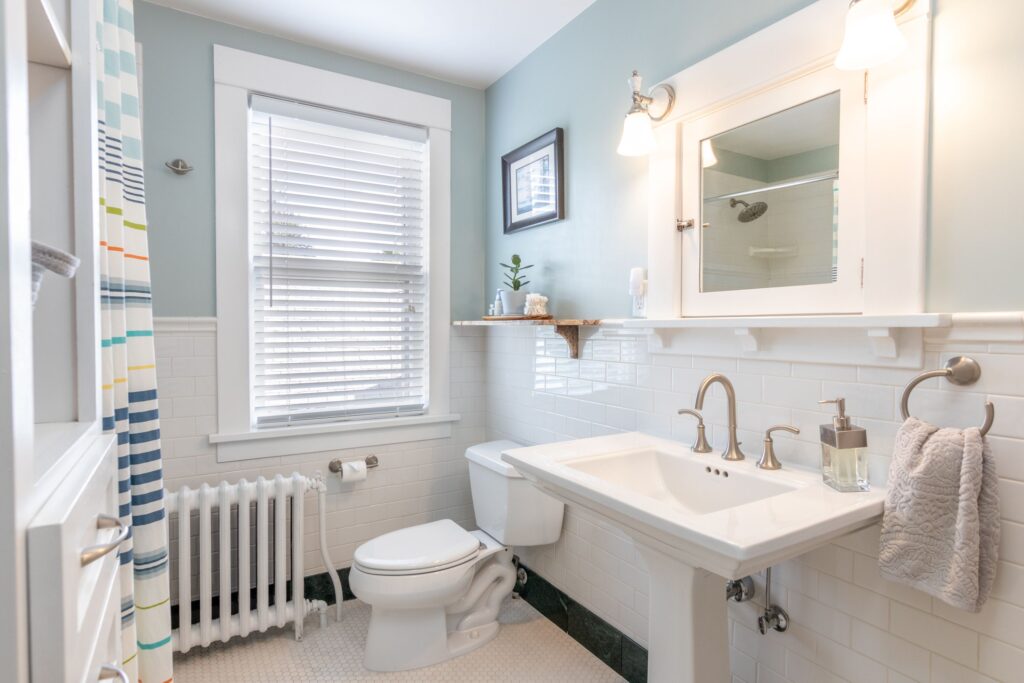
The good news is that modern blind materials have caught up with the demands of wet areas. With the right fabric or finish, a bathroom blind can deliver full privacy, resist mould and moisture damage, and add a genuine design moment to what is often the smallest room in the house. This guide walks through the three things that matter most when choosing bathroom blinds, then looks at which blind types perform best and which to avoid.
Privacy comes first
Privacy in a bathroom is not negotiable, but it is more nuanced than simply blocking the view. Most bathrooms rely heavily on natural light, and a covering that plunges the room into darkness every time it is closed makes the space feel smaller and gloomier than it needs to be. The goal is to stop sightlines while keeping as much soft daylight as possible.
Understanding day and night privacy
A common trap is choosing a light-filtering fabric that looks beautifully private during the day, then discovering it turns semi-transparent at night once the bathroom light is on and it is dark outside. If the window faces a neighbouring property, a street or a shared driveway, test the fabric with this scenario in mind. Blockout and privacy-rated fabrics maintain their opacity in both directions at all times, which makes them the safer choice for ground-floor bathrooms and any window with a direct sightline.
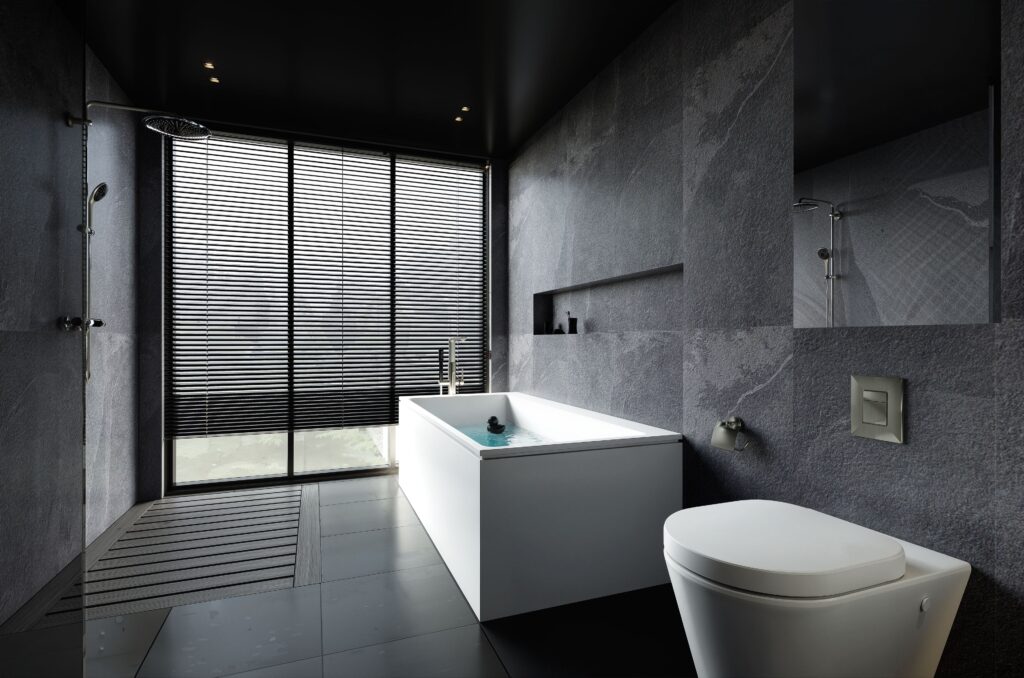
For upper-storey bathrooms or windows that face a fence or garden, a translucent fabric can work well. It diffuses light beautifully and obscures shapes without sealing the room off. Frosted or textured glass also changes the equation, since the glass itself does part of the privacy work and the blind becomes more about light control and softening the window.
The dual roller solution
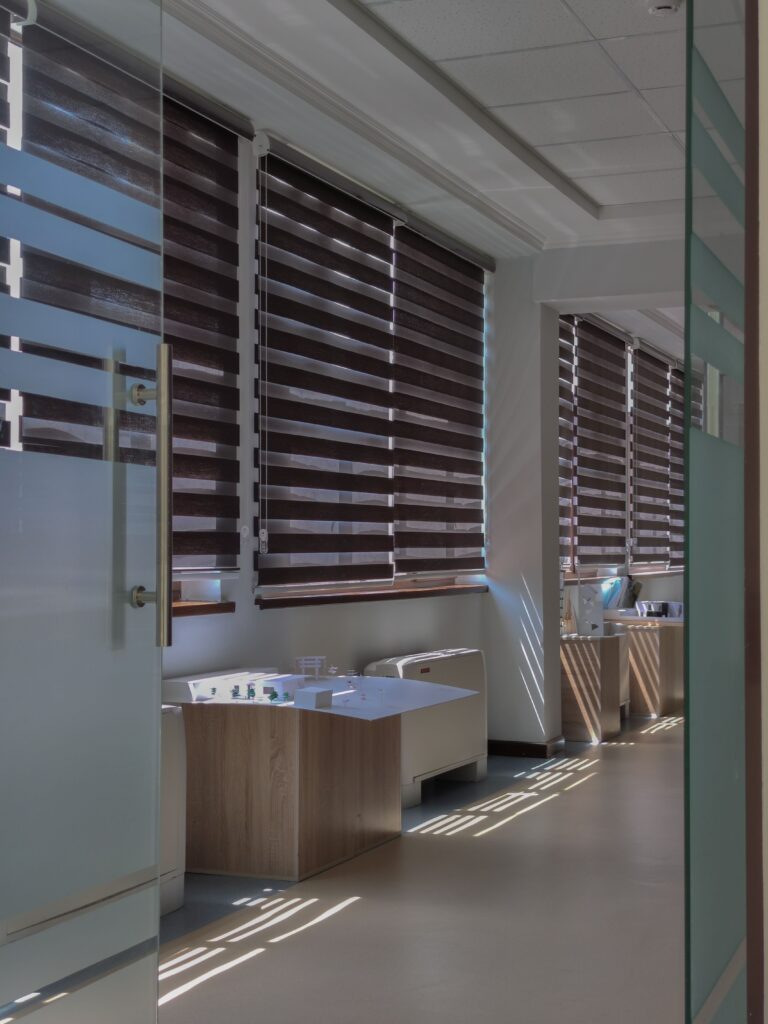
Where full flexibility matters, a double roller blind pairs a translucent fabric with a blockout fabric on a single bracket. Lower the translucent layer during the day for filtered light and daytime privacy, then drop the blockout layer at night for complete coverage. It is a tidy answer for bathrooms that double as the main family bathroom, where morning routines and evening baths place very different demands on the window.
Moisture resistance: the make-or-break factor
Steam is relentless. Every shower fills the room with warm, humid air that settles on every surface, including the blind. Materials that absorb moisture will eventually swell, warp, stain or grow mould, and no amount of cleaning brings back a blind that has started to deteriorate. Choosing the right material at the outset matters far more in a bathroom than in any other room.
Materials that thrive in wet areas
- PVC and vinyl-coated fabrics. These wipe clean, repel water entirely and are the standard recommendation for roller blinds in bathrooms. Many are also treated with anti-microbial coatings that actively resist mould growth.
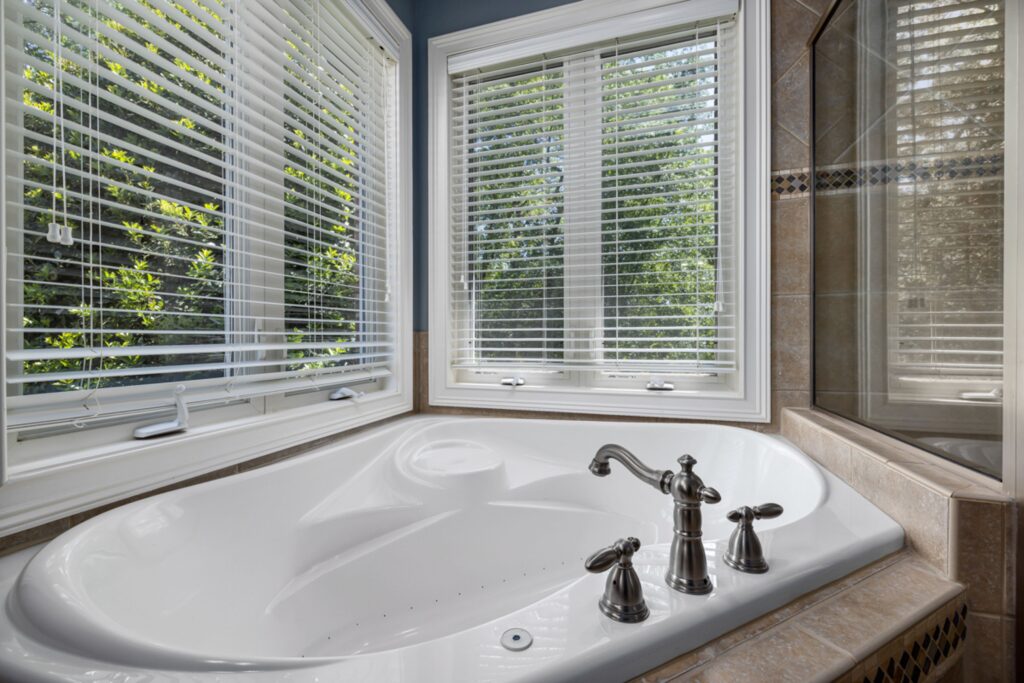
- Aluminium. Aluminium venetians are impervious to moisture, easy to wipe down and available in a wide range of colours and slat widths. They suit both classic and contemporary bathrooms.
- Faux wood (PVC composite). For the warmth of timber without the warping, faux wood venetians deliver the look of painted timber slats in a material that ignores humidity completely.
- Synthetic performance fabrics. Modern polyester screen and blockout fabrics with moisture-resistant treatments hold their shape and colour in humid conditions far better than natural fibres.
Materials to avoid
Natural timber venetians, untreated linen or cotton fabrics, and paper-based cellular blinds all struggle in bathrooms. Timber slats swell and crack as they cycle through humid and dry conditions, natural fibres hold moisture and become a breeding ground for mould, and paper honeycombs simply degrade. If your heart is set on a timber look, faux wood is the answer. If you love the softness of fabric, choose a synthetic weave with a moisture-resistant finish.
Ventilation still matters
Even the most moisture-resistant blind benefits from a well-ventilated bathroom. Running the exhaust fan during and after showers, cracking the window when weather allows, and occasionally raising the blind fully so air can circulate behind it will extend the life of any window covering. A quick wipe with a damp cloth every few weeks keeps surfaces free of the soap and mineral film that steam carries.
Style: small room, big impact
Because bathrooms are compact, the window covering carries more visual weight than it would in a living room. A single well-chosen blind can set the tone for the entire space, which makes the bathroom a wonderful place to be a little braver with colour and texture than you might be elsewhere.
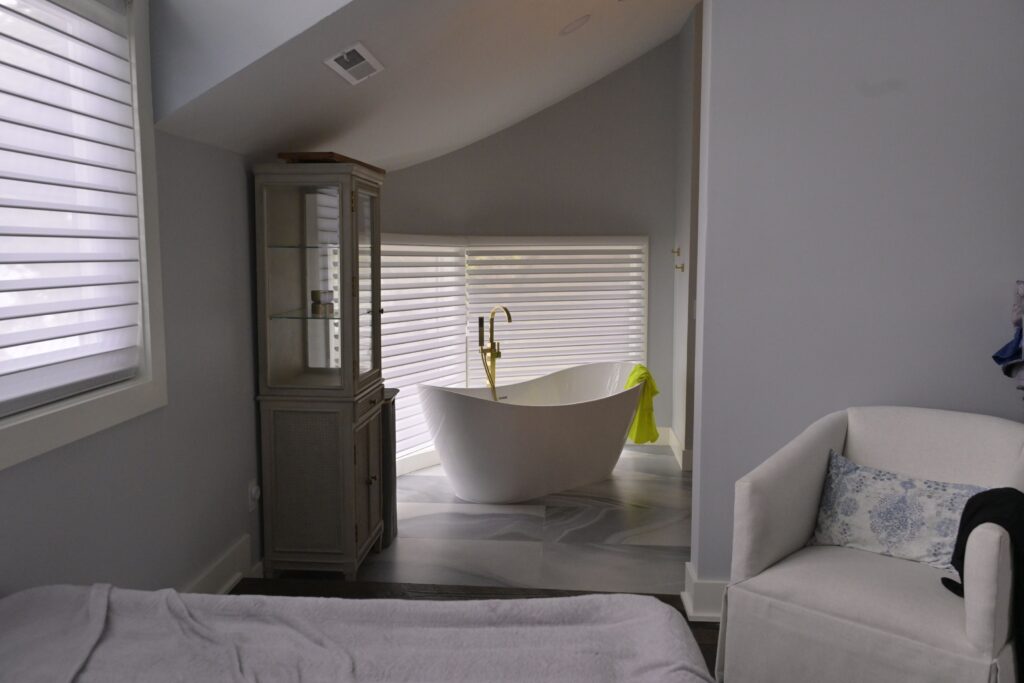
Crisp white or soft grey blinds keep things fresh and let tiles and tapware do the talking. Warm neutrals like stone and linen-look weaves soften bathrooms that lean cool and clinical. For a bolder statement, a deep charcoal or sage roller blind against white tiles creates a striking focal point, while slimline aluminium venetians in a matte finish bring a clean architectural edge to modern bathrooms.
Consider the hardware too. Chain colours, bottom rail finishes and bracket styles are small details, but in a small room they sit at eye level and get noticed. Matching them to your tapware finish, whether chrome, matte black or brushed brass, ties the whole room together.
The best blind types for bathrooms
Roller blinds
The most popular bathroom choice for good reason. A PVC-coated or moisture-treated roller blind is simple, streamlined and easy to wipe clean, with no slats or folds for steam to settle into. Choose a blockout fabric for guaranteed night privacy or a double roller for day and night flexibility.
Aluminium venetians
Venetians offer something rollers cannot: tilt control. Angle the slats upward and light pours in while sightlines from outside are completely blocked, which is ideal for bathrooms overlooked by neighbours. Aluminium handles moisture effortlessly, and slimline 25 millimetre slats suit smaller windows.
Faux wood venetians
All the warmth and character of plantation-style timber slats in a PVC composite that will not warp, crack or fade. A strong choice for Hamptons, coastal and heritage-style bathrooms where aluminium would feel too commercial.
Honeycomb blinds (moisture-rated)
Cellular blinds made from treated synthetic fabric add insulation, which helps reduce condensation on the glass itself in cooler months. Make sure the fabric is specifically rated for wet areas, and favour cordless or top-down bottom-up options that let you cover the lower half of the window while leaving the top open for light.
Practical details worth getting right
- Fit inside the reveal where possible. A recess fit looks tailored and keeps the blind clear of vanities and towel rails, though face fitting gives better light and privacy coverage if the reveal is shallow.
- Mind the splash zone. If the window sits inside or beside the shower, only fully waterproof materials like PVC or aluminium should be used, and the bottom rail should clear the wet area when lowered.
- Choose child-safe operation. Cordless, wand-operated or motorised options remove looped cords entirely, which matters in family bathrooms. Where chains are used, they must be secured with a tensioning device.
- Check the fittings, not just the fabric. Steam corrodes cheap componentry. Look for powder-coated or stainless brackets, chains and bottom rails designed for wet areas.
Get bathroom blinds right the first time
A bathroom blind has to work harder than any other window covering in the home, balancing complete privacy, daily steam exposure and the style of one of your most personal spaces. Choose a moisture-proof material, think carefully about day and night sightlines, and treat the blind as a design feature rather than an afterthought, and the smallest room in the house can become one of the best dressed.
At Peninsula Curtains & Blinds, we help homeowners across the Mornington Peninsula choose bathroom blinds that stand up to steam and look beautiful doing it. Our range includes moisture-resistant roller blinds, aluminium and faux wood venetians and wet-area rated honeycomb blinds, all measured and installed by our local team. Book a free in-home consultation and we will bring the samples to you, so you can see exactly how each fabric and finish works in your bathroom’s light.