
After a long stretch in which plain, understated fabrics dominated the interior design conversation, patterned curtains have made a confident return. Botanical prints, oversized florals, tropical leaves, and nature-inspired motifs are appearing in living rooms, bedrooms, and dining spaces with a freshness and confidence that feels genuinely different from the floral trends of earlier decades.
This is not maximalism for its own sake. The current approach to patterned curtains is more considered than that, rooted in a broader design shift toward warmth, texture, and the idea that a home should feel alive and personal rather than simply curated. Here is what is driving the trend, which prints are working well in Australian homes, and how to use pattern in a way that feels intentional rather than overwhelming.
Why Pattern Is Back
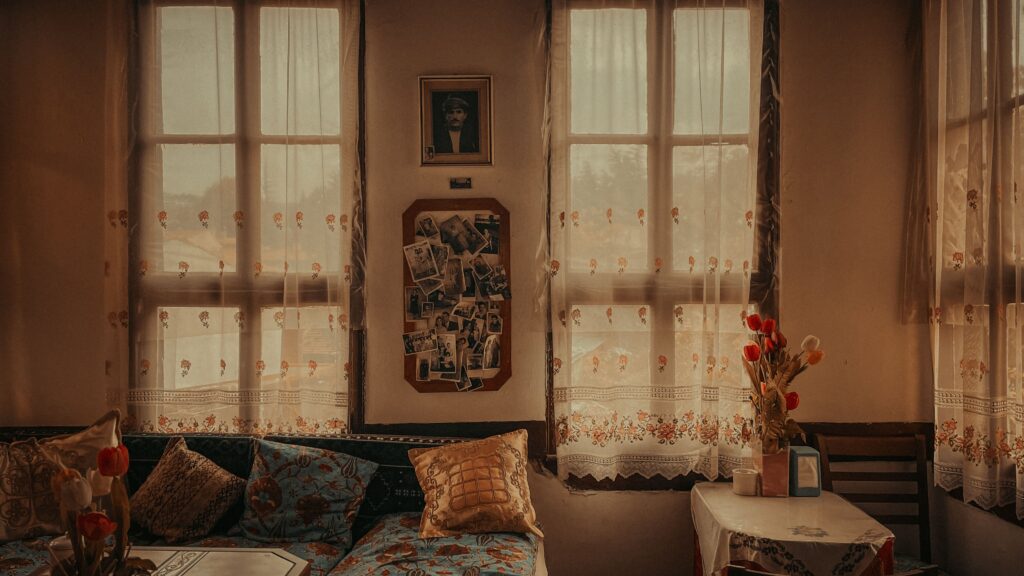
The shift back toward patterned textiles is partly a reaction to the years of grey-and-white minimalism that preceded it. Homes that once felt sleek began to feel cold, and the desire for something warmer, more layered, and more expressive started showing up clearly in what people were choosing for their walls, their soft furnishings, and eventually their windows.
Nature has been the dominant source of inspiration. The biophilic design movement, which draws on the human instinct to connect with the natural world, has had a significant influence on interior trends across the past several years. Botanical and floral prints are a natural extension of this, bringing the sense of nature inside in a way that feels both decorative and grounding.
Curtains in particular are well suited to large-scale botanical prints. The vertical drop of a full-length curtain panel allows a print to be appreciated properly, in the same way that a painting benefits from an appropriately sized frame. A bold leaf motif that might feel chaotic on a cushion or a tablecloth can look genuinely elegant on a floor-to-ceiling curtain where the scale of the repeat is given room to breathe.
What Makes a Botanical Print Work in 2026 and Beyond
Not all botanical prints are created equal, and the ones that are landing well in current interiors share a few qualities in common. The first is restraint in colour palette. Prints that use three to five colours rather than a full spectrum tend to read as more sophisticated and integrate more easily with an existing room. Deep greens, terracotta, dusty blush, warm ochre, and off-white are recurring tones in botanical fabrics that are performing well right now.
The second quality is scale. Large-scale prints with generous repeat patterns feel current and intentional. Small, all-over florals can read as dated and tend to lose their impact on a full-length curtain where the detail becomes visual noise from a normal viewing distance. A bolder, more graphic approach to the motif itself tends to hold up better in a larger space.
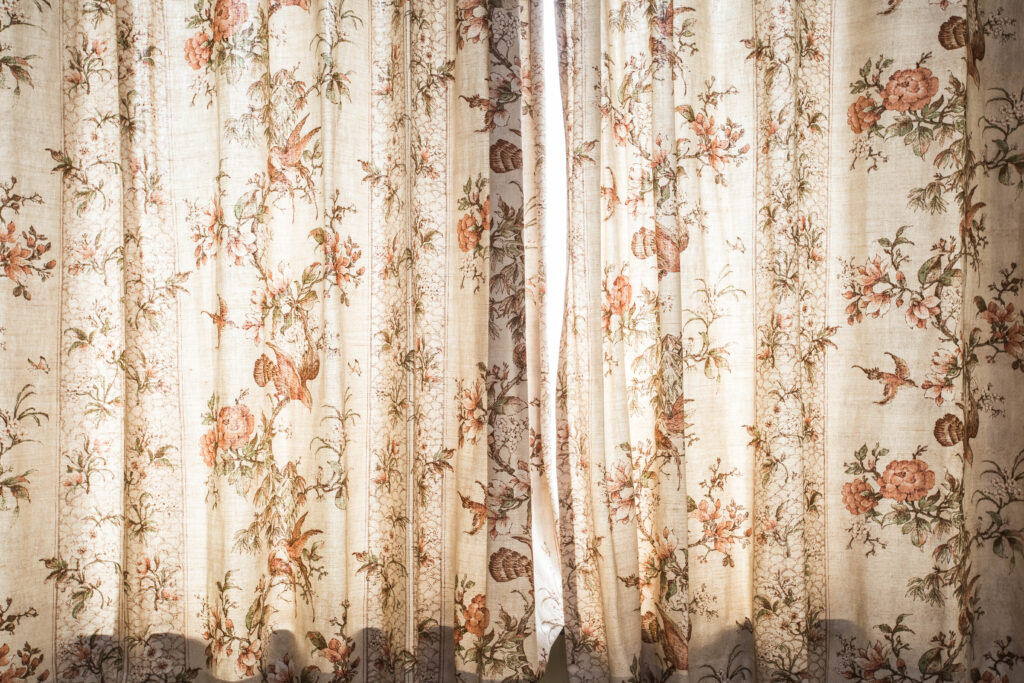
The third quality is ground colour. A botanical print on a dark background, such as deep forest green, navy, or charcoal, has an entirely different character than the same motif on a pale or white ground. Dark-ground botanicals feel more dramatic and enveloping, and suit spaces where a cocooning, evening-focused atmosphere is the goal. Light-ground versions feel fresher and more relaxed, and suit rooms that need to remain airy and bright during the day.
Florals With a Modern Edge
The floral prints making an impact in current interiors bear little resemblance to the small-scale, heavily repeated chintz of previous decades. What is working now tends to be painterly, loose, and slightly abstracted, with a handmade or artist-made quality that distinguishes it from the more formulaic florals of the past.
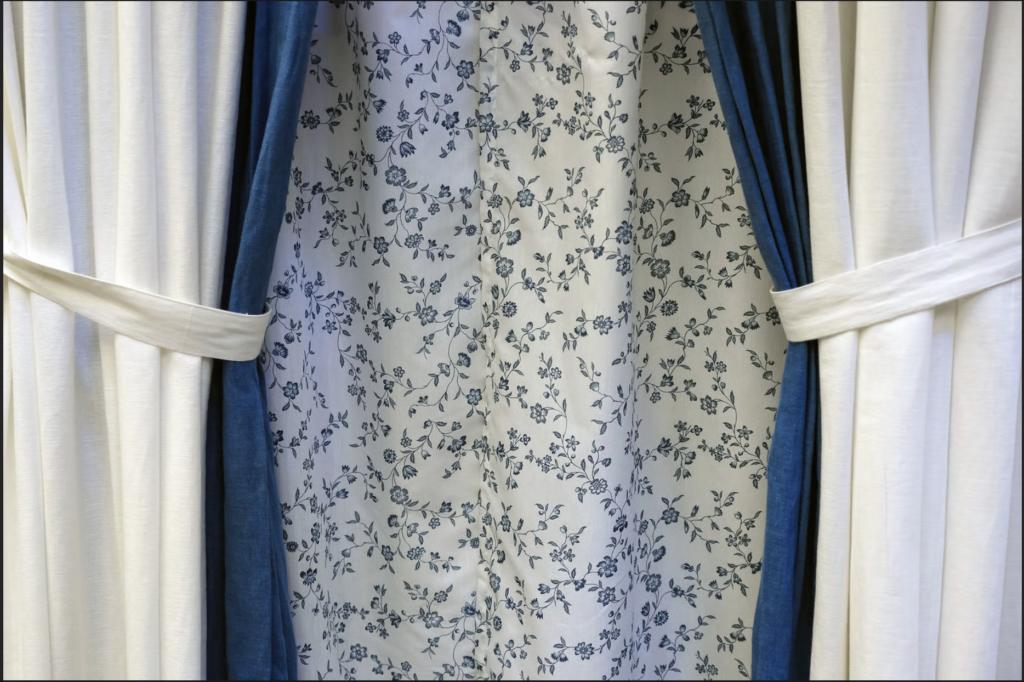
Oversized blooms, botanically detailed but tonally muted, are a strong choice in bedrooms where the goal is warmth and a sense of character without high visual energy. In living and dining rooms, bolder colour combinations can work well, particularly when the rest of the room is grounded in neutrals that let the curtain fabric carry the decorative weight.
Tropical leaf prints, which have been popular for several years across homewares more broadly, continue to translate well to curtain fabric, particularly in coastal or Queensland-style homes where an indoor-outdoor connection is already part of the design language of the house.
Pairing Patterned Curtains With the Rest of a Room
The most common mistake with a bold curtain fabric is trying to layer too much pattern elsewhere in the same room. A confident botanical or floral print on a curtain works best when it is the dominant pattern in the space, with other textiles, upholstery, and soft furnishings kept in plains, textures, or very quiet prints.
Picking out one or two colours from the curtain print and using them elsewhere in the room, in a cushion, a throw, or a decorative object, is the most reliable way to create a sense of cohesion without the room feeling like every element is competing for attention. The curtain fabric leads and the rest of the room responds.
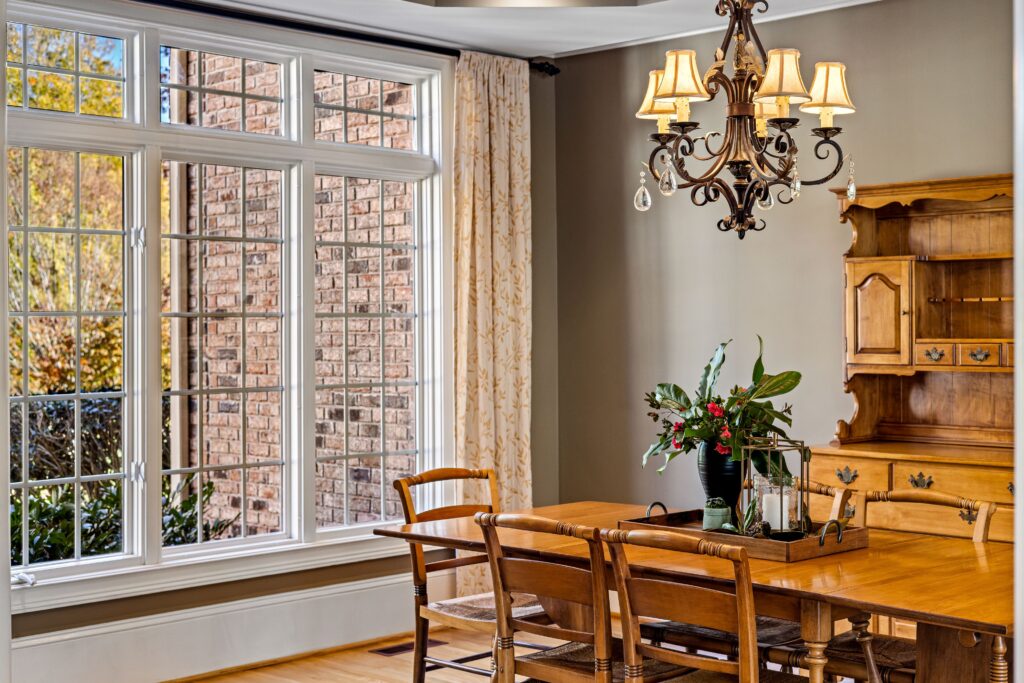
Wall colour also plays a significant role. A botanical curtain against a white wall has a graphic, almost gallery-like quality. The same curtain against a wall painted in a deep complementary tone, a dark green, a warm terracotta, or a soft navy, has a far more immersive and luxurious character. Both are valid, but the decision should be made consciously rather than by default.
Lining Choices for Patterned Curtains
Patterned curtain fabrics benefit significantly from a good lining. Beyond the practical benefits of light control and insulation, a lining adds body to the fabric, helps the curtain hang in fuller, more even folds, and protects the face fabric from UV degradation, which is particularly relevant in Australian homes where summer sun is intense.
For bedrooms, a blockout lining is the most practical choice and has the added benefit of making the curtain hang beautifully regardless of how much light is coming through from behind. For living and dining areas where some daylight filtering is acceptable, a standard or thermal lining is typically sufficient and adds less overall weight to the curtain, which can be an advantage with larger or more elaborate prints. With a patterned fabric, it is particularly important to consider how the curtain looks from outside as well as inside. A blockout or opaque lining means the print is visible from the street only when light inside is stronger than light outside, which for most homes means after dark. During the day, a lined patterned curtain reads as a clean, uniform backing from the exterior, which tends to look considerably neater than an unlined print fabric showing through.
Where to Use Pattern and Where to Hold Back
Pattern works hardest in rooms where atmosphere and character are the priority, and where the room is experienced rather than passed through. Living rooms, dining rooms, master bedrooms, and sitting rooms are the natural home for a bold botanical or floral curtain fabric.
Hallways, laundries, and home offices tend to benefit from a simpler approach, both because the windows are often smaller and because the functional nature of these spaces does not always benefit from high visual input. That said, a small window with a well-chosen botanical print roman blind can be a genuinely lovely detail in an otherwise simple room, provided the scale of the print suits the size of the window.
For homeowners who are drawn to pattern but uncertain about committing to it across a full wall of curtains, a single patterned roman blind in a smaller room is a lower-stakes starting point. It allows a feel for how pattern behaves in a home, how it interacts with the light and the other elements in the room, before scaling up to a larger application.
Explore Patterned Curtains With Peninsula Curtains & Blinds
At Peninsula Curtains & Blinds, we work with a wide range of fabric suppliers offering botanical, floral, and nature-inspired prints suited to the light, scale, and lifestyle of Mornington Peninsula homes. Whether you are ready to commit to a full room of floor-to-ceiling patterned drapes or simply want to explore what is available, our team can help you find a fabric that works for your space and hang it to a professional standard.
Get in touch to arrange a free measure and quote, and let us bring a little of the natural world into your home.