
Choosing curtains for a child’s bedroom involves a different set of priorities than furnishing any other room in the house. Safety has to come first, sleep quality is a genuine concern rather than a nice-to-have, and the room still needs to feel like a place a child actually enjoys spending time in. The good news is that none of these priorities need to compete with each other.
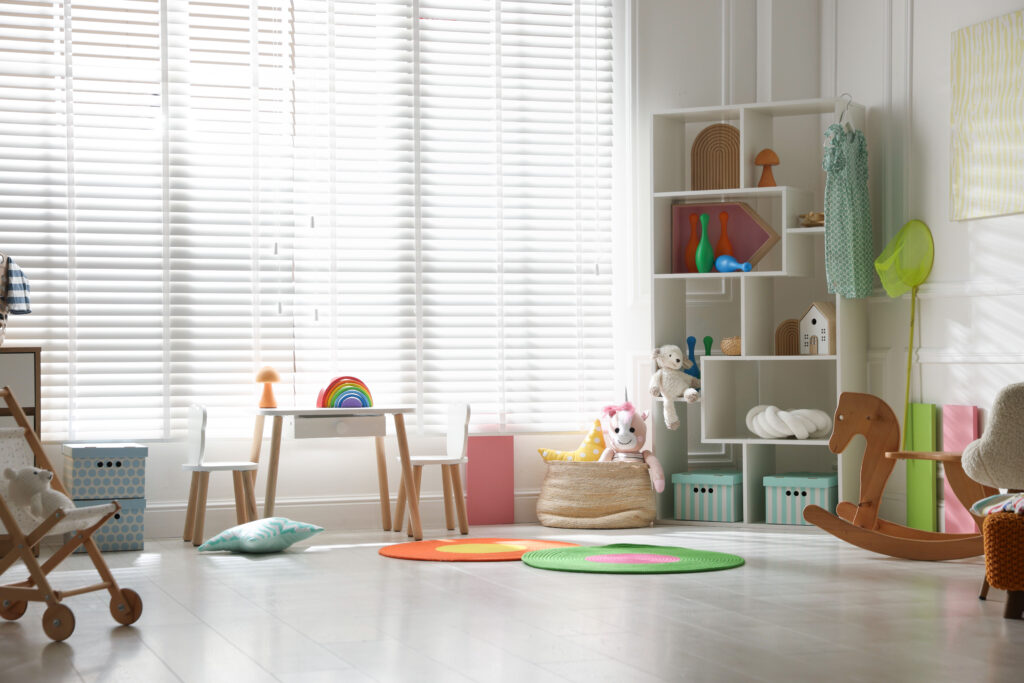
Here is what to look for when choosing curtains for a kids’ room, from safety standards through to the fabric and styling choices that make a space feel fun without sacrificing function.
Why Safety Comes First
Window furnishings are one of the more overlooked hazards in a child’s bedroom. Looped cords on traditional curtains and blinds present a genuine strangulation risk, particularly for children under five who are curious enough to pull on a dangling cord but not yet able to free themselves if it wraps around their neck. This is not a rare or theoretical concern. It is the reason cord safety standards exist in the first place.
Australian Standards require corded internal window coverings installed in homes to include safety devices that keep cords out of reach, such as cord cleats, tensioners, or breakaway connectors. When choosing or installing curtains and blinds in a child’s room, confirming that any cords are secured well above a child’s reach, or choosing a cordless option entirely, should be treated as a non-negotiable first step rather than an afterthought.
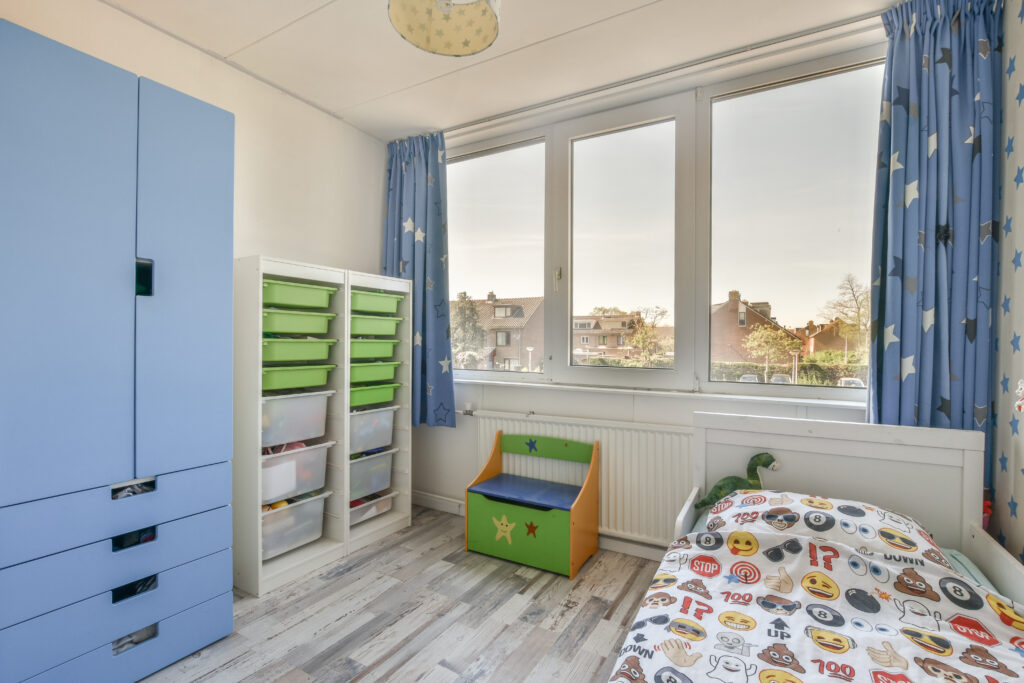
Beyond cords, curtain hardware itself is worth a second look in a child’s room. Rods and brackets should be mounted securely enough to withstand a child pulling on the fabric, and any decorative finials or hooks at low height should be smooth and free of sharp edges.
Cordless and Cord-Safe Options
For families who want to remove cord risk altogether, curtains hung on a simple rod or track are inherently the safest option, since there is no cord mechanism involved at all. For families who prefer a blind for a particular room or window, cordless blinds operated by a spring mechanism or a wand have become widely available and are increasingly the default recommendation for children’s rooms and nurseries.
Motorised blinds are another option worth considering, particularly for households already using smart home systems elsewhere. With no cord at all, a motorised blind removes the hazard entirely while still offering the convenience of easy operation, which is a genuine advantage in a room a parent might be adjusting in the dark during a late-night settle.
Blackout Performance and Sleep
Sleep quality in children is closely tied to light exposure, and this matters more in a child’s room than almost anywhere else in the house. Long summer evenings, early morning sun, and streetlights can all interfere with the wind-down and sleep-through process, particularly for toddlers and younger children who are more sensitive to light cues than adults.
Genuine blockout fabric is the most reliable way to manage this. A well-made blockout curtain, lined with a dedicated blockout layer rather than simply a heavier decorative fabric, can reduce external light by close to 100 percent. This makes a meaningful difference for daytime naps in summer and for early body-clock wake-ups in the warmer months when the sun rises well before a reasonable wake time.
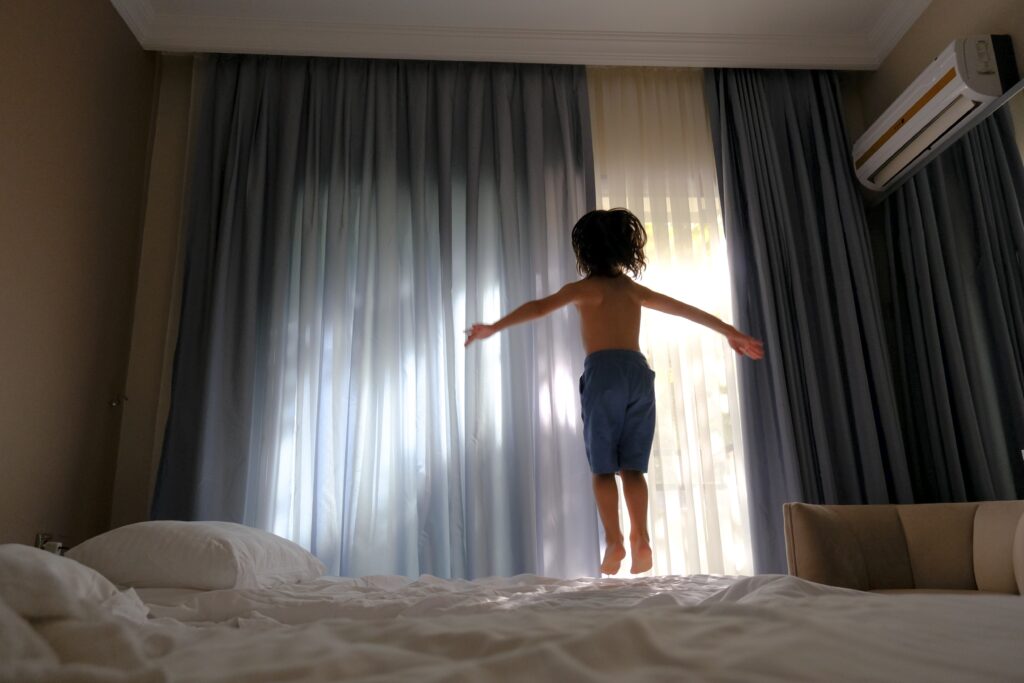
It is worth noting that not all curtains marketed as having a blockout look actually block out light effectively. A thick or dark fabric can still let in a surprising amount of light around the edges and through the weave itself if it does not have a true blockout lining. When light control is the priority, checking that a curtain includes a proper blockout backing matters more than fabric weight or colour alone.
For the best result, pairing blockout curtains with a close-fitting track or rod, and ensuring the curtain width and length adequately cover the window including the sides, prevents light leaking in around the edges of the treatment.
Fabric Choices That Are Fun Without Being Fussy
A kids’ room is one of the few spaces in a home where a playful pattern or bold colour choice genuinely suits the room rather than feeling like a passing trend. That said, choosing a print or colour that will outlast a specific phase or character interest tends to be the more practical long-term decision.
Soft geometric prints, subtle stars or clouds, gentle stripes, and nature-inspired motifs like leaves or animals tend to suit a child’s room for years rather than months, unlike curtains tied to a specific licensed character or trend that a child may outgrow within a year or two. For families who want a stronger statement, a feature wall colour or wallpaper paired with a simpler block-colour curtain is often a more adaptable combination than a heavily patterned curtain on its own.
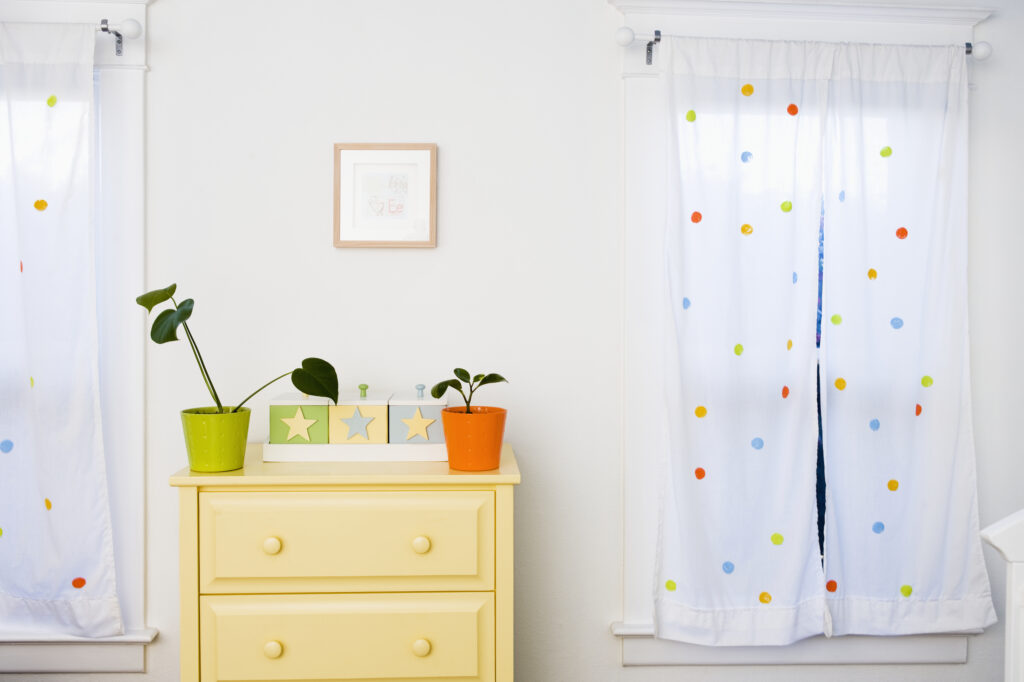
Colour choice also has a practical dimension. Lighter colours and pastel tones tend to show less fading over time in rooms that receive strong sun, while deeper tones such as navy, forest green, or charcoal pair well with blockout linings and tend to hide everyday marks and fingerprints more easily than very pale fabrics.
Durable, Easy-Care Fabrics
Children’s rooms see more daily wear than most other rooms in a home, from sticky fingers to the occasional climbed-on windowsill. Choosing a fabric that can handle this is as important as choosing one that looks good.
Polyester and polyester-blend curtain fabrics are a practical choice for kids’ rooms because they resist fading, hold their shape well, and are generally easier to spot clean than natural fibres like linen or cotton. For families who prefer a more natural-fibre look, a cotton-polyester blend offers a reasonable middle ground between the softer appearance of natural fabrics and the practicality of synthetic blends.
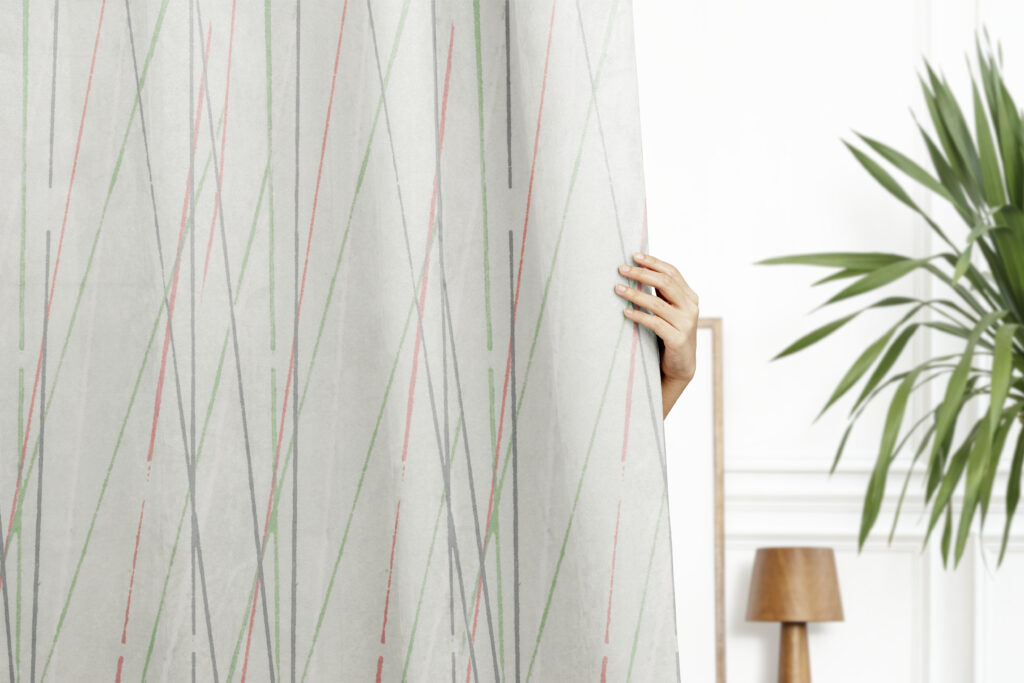
Machine-washable curtains, or curtains that can be easily taken down and professionally cleaned, are worth prioritising over fabrics that require specialist dry cleaning, simply because kids’ room curtains tend to need cleaning more often than those in adult-only spaces.
Roller Blinds and Roman Blinds for Smaller Rooms
Children’s rooms are often smaller than adult bedrooms, and floor-to-ceiling curtains are not always practical when furniture placement is tight. Roller blinds in a blockout fabric are a strong option here, offering full coverage and excellent light control without the bulk of a full curtain stack.
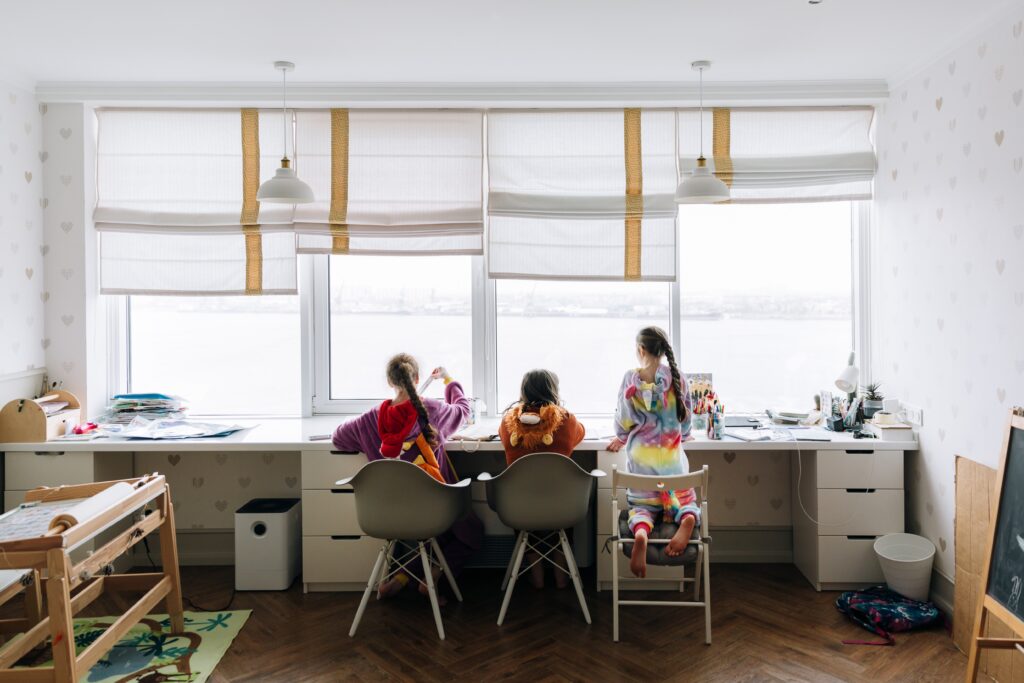
Roman blinds in a soft, child-friendly print can offer a similar space-saving benefit while adding more texture and personality than a plain roller. When choosing a roman blind for a child’s room, a cordless lift mechanism is particularly important given how often these blinds are operated and how accessible the lift cords can otherwise be at a child’s height.
A Quick Checklist Before You Choose
Before finalising curtains or blinds for a child’s room, it is worth running through a short mental checklist: confirm any cords are secured, tensioned, or removed entirely; choose a genuine blockout lining if sleep quality is a priority; consider a layered sheer option for flexibility as a child grows; pick a fabric and colour that will suit the room for several years rather than a single season; and choose an easy-care fabric that can handle everyday wear.
Getting these fundamentals right at the outset makes for a room that is safe, restful, and still genuinely fun for the child who gets to grow up in it.
Let Us Help You Get It Right
At Peninsula Curtains & Blinds, we help families across the Mornington Peninsula choose window furnishings that meet safety standards, deliver genuine blackout performance, and still suit the personality of the room. From cordless blind mechanisms through to blockout-lined curtains in a range of child-friendly fabrics, our team can guide you through the options that are right for your child’s age and stage.
Get in touch to arrange a free measure and quote, and let us help you create a kids’ room that ticks every box.