
There is a reason that the most polished, high-end interiors rarely rely on a single window treatment. Layering curtains and blinds is one of the most effective techniques in interior design, and it is far more achievable in everyday homes than most people assume. When done well, it adds depth, texture, and a sense of considered luxury that a standalone blind or curtain simply cannot replicate.
This guide covers how layering works, which combinations tend to perform best, and the practical considerations that help the finished result look intentional rather than cluttered.
Why Layering Works
A single window treatment does one job. A blind provides light control or privacy. A curtain adds softness and visual weight. When you combine both, you get the functional benefits of each, along with a visual richness that neither delivers on its own.
Layering also gives a room flexibility across the day and across seasons. A sheer roman blind can filter afternoon sun while full-length drapes drawn in the evening transform the same window into something altogether more dramatic and cocooning. That range of atmosphere is difficult to achieve with a single product, no matter how well chosen.
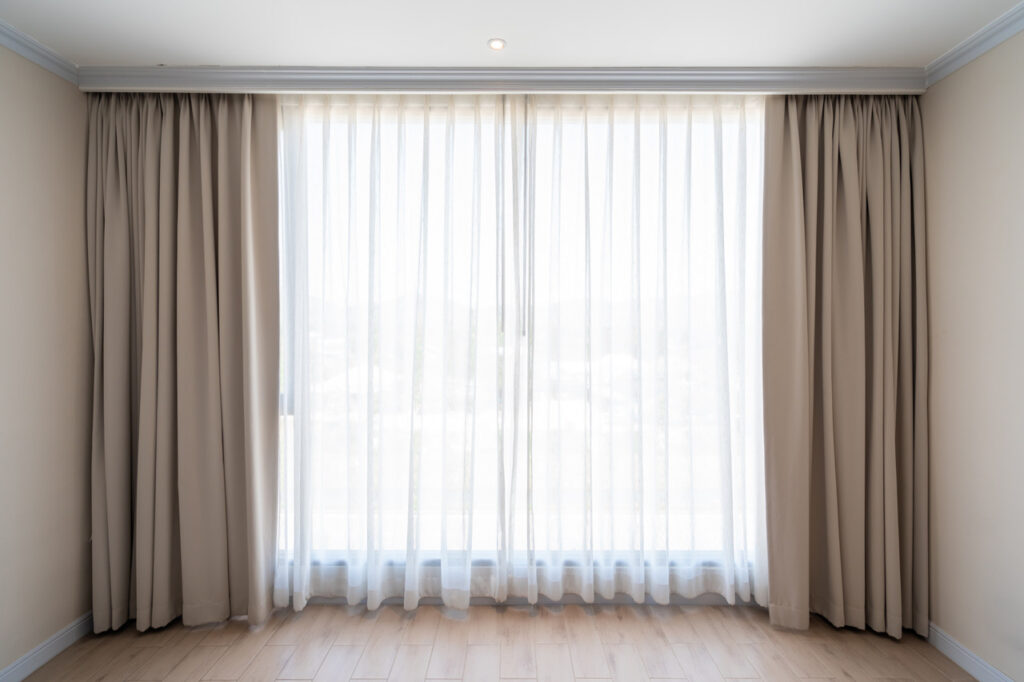
From a purely visual standpoint, layered window treatments signal care and attention. They suggest that a room has been thought through rather than furnished quickly, which is precisely the quality that gives spaces their sense of luxury.
The Classic Combination: Sheers and Drapes
The most widely used layering approach pairs a sheer or voile curtain close to the window with a heavier drape on the outside. The sheer filters light and provides daytime privacy without blocking the view entirely, while the drape adds weight, colour, and the ability to fully close off the window when needed.
For this combination to feel luxurious rather than busy, the two fabrics need to be in conversation with each other. A crisp white or ivory linen sheer pairs beautifully with a warm taupe, soft charcoal, or deep jewel-toned drape in velvet or a textured weave. The contrast in weight and opacity is part of what makes the pairing feel considered.
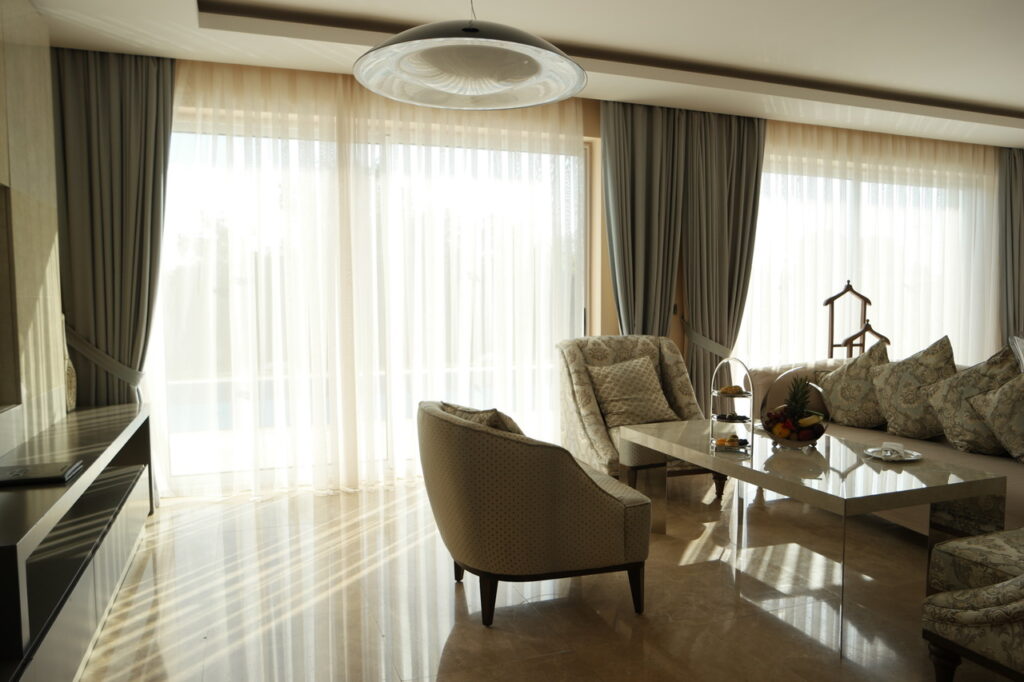
Both layers should be hung at ceiling height and fall to the floor. This is non-negotiable if the goal is a luxurious result. Short or mid-length treatments undermine the sense of grandeur that floor-to-ceiling layering creates.
Blinds and Curtains: A Practical Pairing
Pairing a blind with a curtain is a particularly practical approach in rooms where wall space is limited or where a heavier curtain stack on each side of the window would feel too dominant. The blind handles the functional work of light control and privacy while the curtain frames the window and softens the overall composition.
Roller blinds are the most common partner for curtains in contemporary interiors. Their clean, minimal profile when fully raised means they do not compete visually with the curtain fabric. A blockout or sunscreen roller blind tucked neatly into the window recess, paired with full-length panels in a textured linen or cotton blend, is a combination that suits everything from coastal homes to modern apartments.
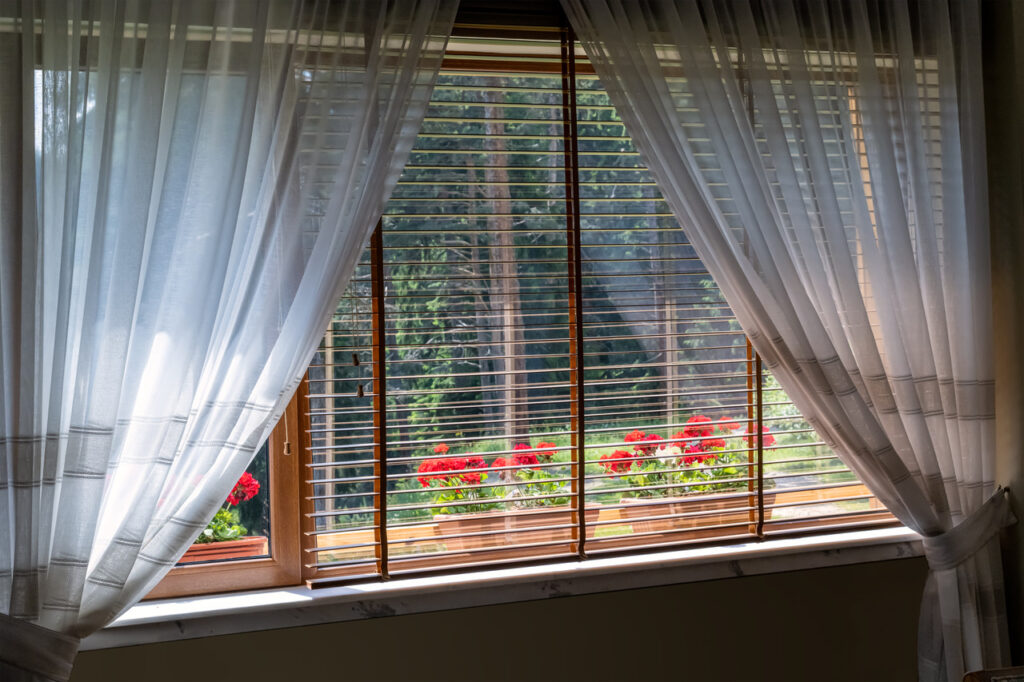
Roman blinds are a popular choice for a slightly more traditional or relaxed look. Paired with unlined side panels in a complementary fabric, a roman blind adds structure to the centre of the window while the curtains provide the softness and scale that make the arrangement feel complete.
Getting the Hardware Right
Hardware choices matter more in a layered setup than in a single-treatment installation. With multiple layers in play, the rods, tracks, or brackets become more visible and need to work together cohesively.
Double ceiling tracks are the cleanest option for a sheer-plus-drape combination. They allow both layers to run independently on separate tracks, both mounted from the ceiling, so the transition between them is seamless. There are no visible rod brackets on the wall and the full height of the room is used to maximum effect.
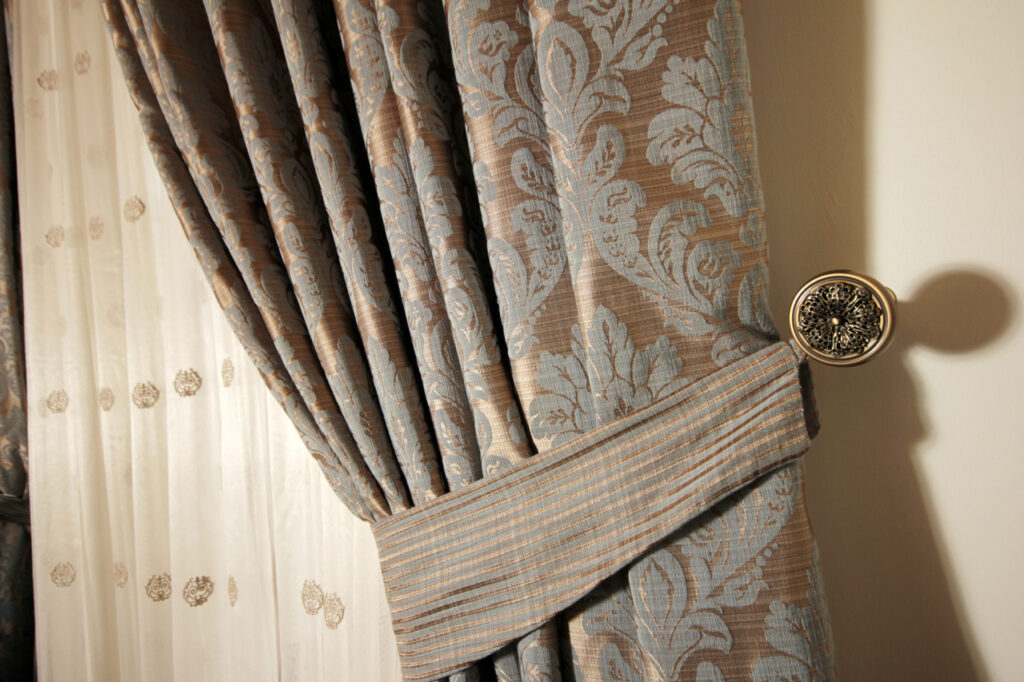
For a blind-and-curtain combination, the curtain rod or track typically sits in front of the blind bracket. In this setup, ensuring the curtain hardware projects far enough from the wall to clear the blind when the curtain is open is important. A projection of at least 80 to 100 millimetres from the wall is generally sufficient, though this depends on the profile of the blind bracket being used.
Keeping hardware finishes consistent across a room pulls everything together. Brushed brass, matte black, and brushed nickel are all popular choices in current interiors. Mixing finishes rarely improves a result.
Fabric Choices and How They Interact
The success of a layered treatment depends heavily on how the fabrics relate to each other. Contrast in weight and texture is the goal, but contrast in colour requires more care.
Tonal combinations, where both layers sit within the same colour family at different depths, are the safest starting point and often the most sophisticated result. A warm white sheer with a sandy linen drape. A soft grey roller with charcoal velvet panels. A dusty blush roman blind with terracotta-toned curtain fabric. These pairings create depth without the risk of the layers fighting each other.
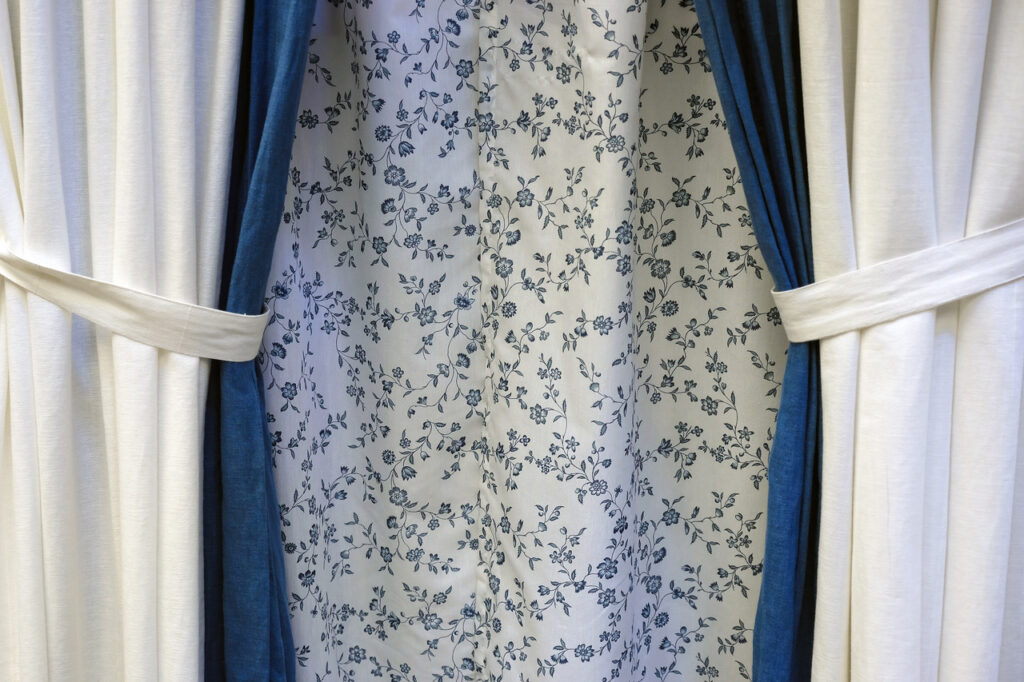
Contrast combinations can work well when one layer is genuinely neutral. A crisp white roller blind paired with deep navy or forest green drapes is a combination that reads as bold and intentional rather than mismatched. The key is that one layer grounds the pairing while the other carries the colour.
Avoid combining two layers that are both visually dominant. Two patterned fabrics, or two fabrics of similar weight and opacity, will compete rather than complement.
Room-by-Room Considerations
Layering works across every room in a home, but the right combination varies depending on how the space is used.
In living areas, the priority is usually atmosphere and light control. A sheer-plus-drape combination gives the most flexibility, allowing the room to feel airy and open during the day and warm and enclosed in the evening. In larger living rooms with multiple windows, keeping the same treatment across all windows maintains cohesion and avoids the space feeling fragmented.
In bedrooms, blockout performance becomes the primary consideration. A blockout roller blind beneath full-length drapes is the most effective approach for light-sensitive sleepers. The blind does the functional work, while the drapes deliver the soft, enveloping feel that makes a bedroom feel genuinely restful.

In dining rooms, layering adds a sense of occasion that suits the purpose of the space. Roman blinds with side panels in a slightly more textured or formal fabric elevate the room without overwhelming it. Dining rooms rarely need high levels of light control, so the emphasis can shift more toward aesthetics.
In home offices and studies, a sunscreen roller paired with a light linen panel is a practical choice that manages glare on screens during the day while softening what can otherwise be a fairly utilitarian space.
Common Mistakes to Avoid
Layering is one of those techniques that is easy to get right with a bit of planning and easy to get wrong without it. The most common mistakes are worth knowing before committing to a purchase.
Hanging treatments too low is the single most common error. Curtains mounted at or just above the architrave, rather than at ceiling height, lose much of their impact and make the room feel smaller. If the ceiling height is low, mounting as high as the cornice allows is still preferable to mounting at the window frame.
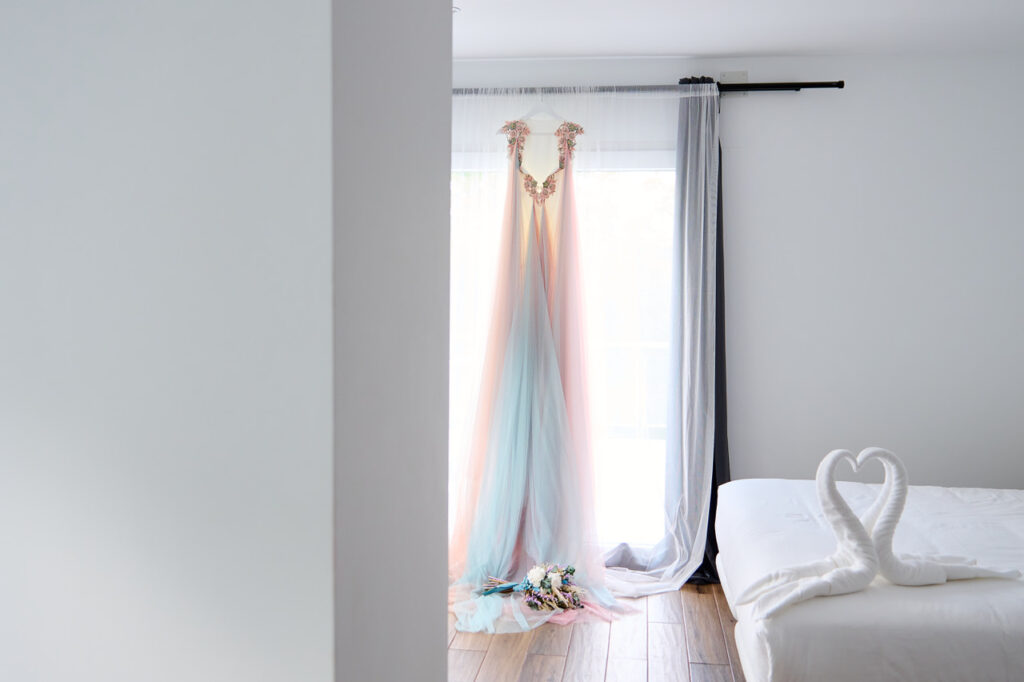
Choosing curtain width that is too narrow is another frequent issue. Each curtain panel should be at least 1.5 times the width of the space it covers when drawn back, and ideally closer to double width for a full, gathered look. Flat, stretched panels never read as luxurious regardless of the fabric quality.
Ignoring the stack-back space available on either side of the window can also undermine the result. When curtains are fully open, they need somewhere to sit without blocking the glass. Measuring and planning for the stack-back before installation avoids a situation where fully opened curtains still cover a significant portion of the window.
Making It Work in Your Home
At Peninsula Curtains & Blinds, we help homeowners across the Mornington Peninsula design and install layered window treatments that balance practical performance with a polished, finished look. From fabric selection and hardware specification to precise measurement and professional fitting, our team handles every detail.
If you are ready to explore what layering could look like in your home, get in touch to arrange a free measure and quote. We would love to help you get it right.