
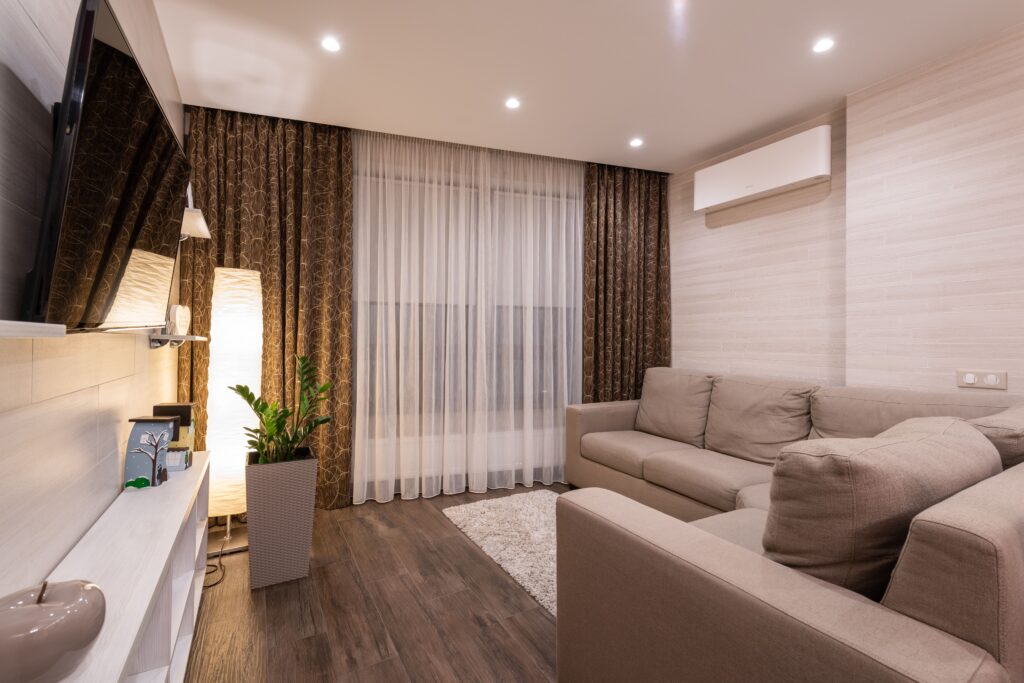
There is something quietly luxurious about curtains that draw themselves. Morning light easing into the bedroom as the alarm goes off, the living room dimming for a movie at a single voice command, or every window in the house closing at sunset without anyone lifting a hand. What was once a high-end custom job has become genuinely accessible, and motorised curtains are now one of the most requested upgrades in new builds and renovations.
The technology has matured, prices have come down, and the three major smart home ecosystems now play nicely with a wide range of motorised tracks and rods. This guide covers how smart curtains actually work, what to know before you buy, and how to pair them with Amazon Alexa, Google Home and Apple HomeKit so they sit inside the rest of your smart home rather than as an isolated novelty.
How smart curtains actually work
A smart curtain system has three parts: the motor, the track or rod, and the bridge that connects it to your phone and voice assistants. The motor is either built into the end of the track (an integrated system) or clipped onto an existing curtain rod as an add-on device. In both cases, the motor drives the curtains open and closed along a track, using a belt or gear mechanism designed to run smoothly and quietly.
Power comes from either a hardwired connection, a rechargeable battery pack or a small solar panel mounted near the window. Hardwired options are the most reliable and best suited to new builds where electrical wiring can be planned in behind the pelmet. Battery-powered motors are the easiest retrofit, typically needing a charge every three to six months depending on how often the curtains cycle.
The bridge is what turns a motorised curtain into a smart curtain. It is a small hub that sits somewhere in the home, usually plugged into your router, and translates commands between the motor’s own radio protocol and your smart home platform. Some newer motors have Wi-Fi or Matter support built in and skip the bridge entirely, though a dedicated hub still tends to give the most reliable performance.
Choosing your ecosystem
Before shopping for curtains, decide which smart home platform will run the show. If you already use smart speakers, lighting or a video doorbell, the answer is usually whichever ecosystem those devices belong to. Mixing platforms is possible but adds complexity, and most people are happiest picking one and letting everything else fall in behind it.
Amazon Alexa
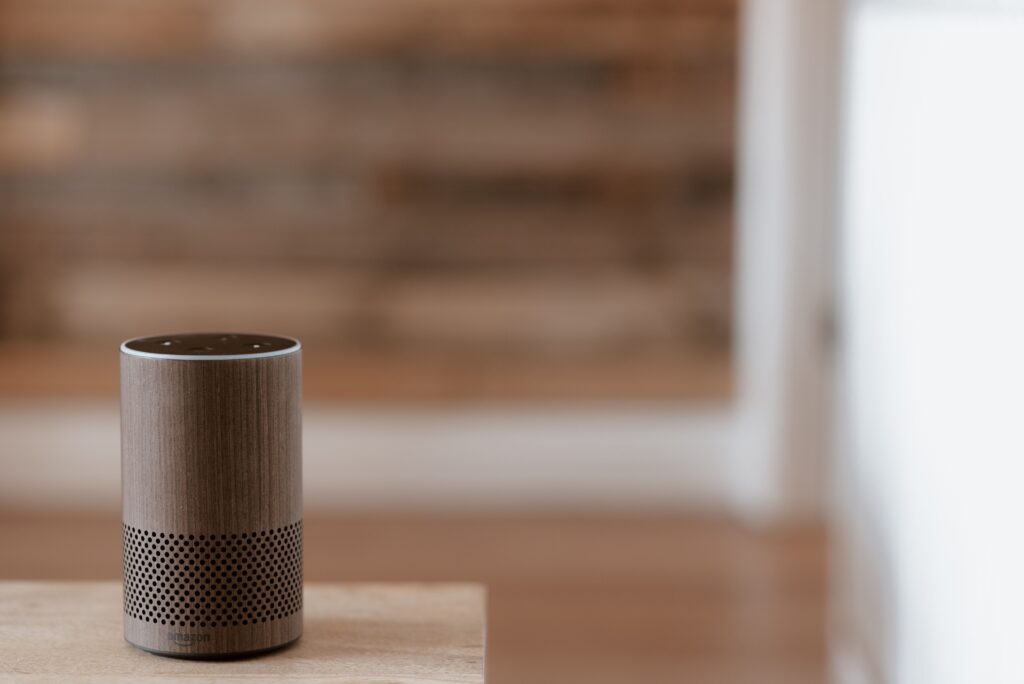
Alexa is the most widely supported voice assistant in Australian homes, thanks in part to the popularity of Echo speakers. Setup is straightforward: install the motor manufacturer’s app, connect the curtains to your Wi-Fi network, then enable the matching Alexa skill inside the Alexa app. Once linked, you can control curtains by name (“Alexa, open the living room curtains”) and roll them into routines alongside lights, thermostats and speakers.
Alexa’s strengths are the sheer number of compatible motor brands, its excellent routine builder, and its willingness to work with almost anything. The weakness is that shared control between different family members’ accounts can get fiddly, and privacy-conscious households sometimes prefer alternatives.
Google Home
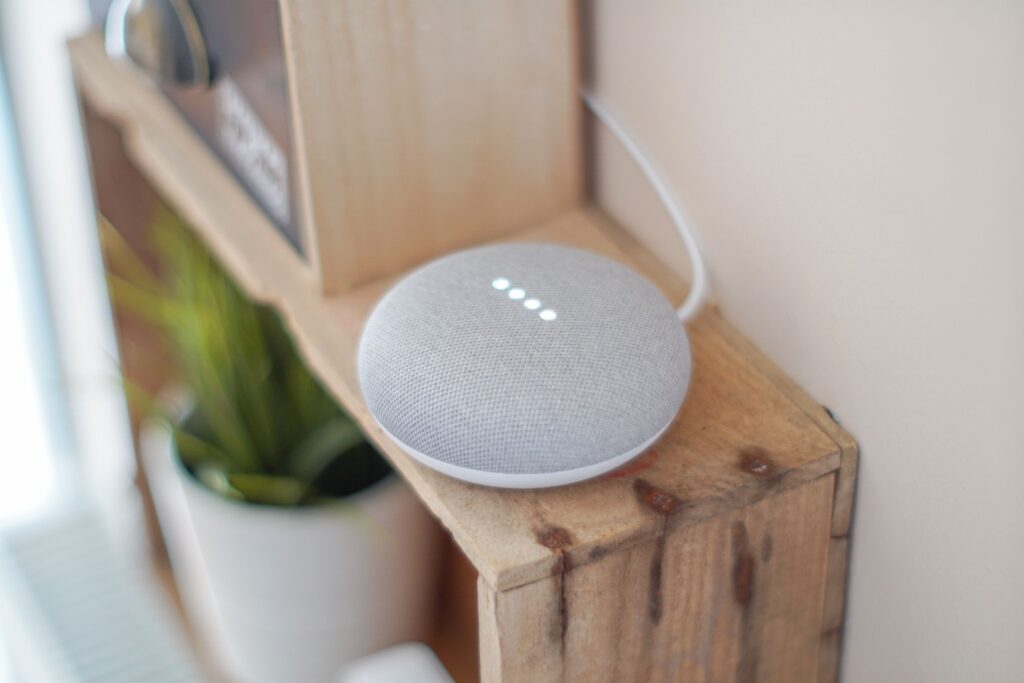
Google Home is a natural fit for households already using Android phones, Nest speakers or Chromecast. The Google Home app has become genuinely polished in the last two years, with clean room-based grouping and reliable voice control through any Google Assistant device. Curtains appear alongside lights and blinds, and you can set them to open with a sunrise trigger or close when everyone leaves the house.
Google’s automation builder is now on par with Alexa’s for most everyday tasks, and voice recognition tends to be slightly better with Australian accents. The trade-off is a smaller pool of directly compatible motor brands, though the gap is closing quickly as Matter support rolls out.
Apple HomeKit
For iPhone and iPad households, HomeKit offers the tightest integration and the strongest privacy story. Control lives in the Apple Home app, voice commands go through Siri on any HomePod, iPhone or Apple Watch, and automations run locally on a home hub rather than round-tripping through the cloud. The interface is calm, uncluttered and treats curtains as first-class citizens.
The catch is that fewer motors carry native HomeKit certification, and those that do usually sit at the premium end of the market. That gap is narrowing thanks to Matter, which lets HomeKit talk to certified curtains without a brand-specific bridge, but it is still worth checking compatibility carefully before committing.
A word on Matter
Matter is a shared smart home standard backed by Apple, Google, Amazon and hundreds of device makers. A Matter-certified curtain motor works with all three ecosystems out of the box, no brand-specific bridges required. If you value flexibility, or if different family members prefer different assistants, prioritising Matter compatibility is the single best future-proofing decision you can make in 2026.
Look for the Matter logo on the box or the product page. Some older motors will also gain Matter support through a firmware update, so it is worth asking your installer whether the model on offer has a Matter roadmap even if it does not yet ship with the standard enabled.
What to know before you buy
Curtain weight and track length
Motors are rated for a maximum curtain weight and a maximum track length. Heavy blockout curtains with thermal linings pull much harder than a light sheer, and long spans across bifold or picture windows demand more torque. Undersizing the motor is the most common cause of premature failure, so err on the generous side and choose a motor rated well above your actual load.
Power source and access
For hardwired motors, plan for a power outlet or spur inside the pelmet or ceiling void before the plaster goes up. Retrofitting into a finished room is possible but often means visible cabling. Battery motors avoid the cabling problem but need to be reachable for charging, so consider how easily you will be able to reach a motor mounted three metres up above a stairwell.
Noise
Quality motors run at whisper-quiet volumes, but budget units can produce a distracting whine, particularly at the start and end of travel. Bedroom curtains that open on a schedule are the acid test. If sleep is precious, insist on a soft-start, soft-stop motor and ask to hear a live demonstration before you order.
Speed and travel limits
Modern motors let you set travel limits precisely, so curtains stop exactly where you want them each time. Some also allow variable speeds and partial opening (a favourite is a gentle 30 per cent open in the mornings). Confirm that your chosen motor supports partial positioning through your smart home platform, since some cheaper units only support fully open or fully closed.
Automations worth setting up on day one
- Sunrise wake. Bedroom curtains open slowly at sunrise or 30 minutes before your alarm. Winter mornings feel dramatically less brutal.
- Sunset close. Living and dining curtains close automatically at sunset to preserve privacy and cut heat loss through single-glazed windows.
- Away mode. Randomised open and close schedules while you are on holiday give the impression of an occupied home without any wasted energy.
- Movie scene. A single voice command dims lights, lowers curtains and starts the streaming device, all at once.
- Summer heat protection. West-facing curtains close automatically once indoor temperatures cross a threshold, keeping bedrooms cooler through the afternoon.
A few things that trip people up
Wi-Fi coverage at the window is the most common problem. Curtain motors that use Wi-Fi directly need a strong signal at the top of the track, and homes with thick walls or windows at the far edge of the property often see dropouts. A mesh Wi-Fi system or a bridge that uses a stronger low-power radio protocol solves this cleanly.
Curtain hardware also matters more than expected. Cheap tracks with sticky glides will make even the best motor sound and feel laboured. If you are motorising an existing track, a professional assessment of the track condition is money well spent. In many cases the motor and a new smooth-glide track go in together as a package.
Ready for curtains that draw themselves?
Smart curtains have moved firmly out of the early adopter phase. With the right motor, a well-planned power supply and a smart home platform that matches how the household actually lives, they deliver real everyday comfort and can meaningfully reduce heating and cooling loads at the same time. The trick is matching the technology to the room, the curtain and the ecosystem from the outset rather than working backwards from a bargain motor.
At Peninsula Curtains & Blinds, we install motorised curtain systems that integrate cleanly with Alexa, Google Home and Apple HomeKit, and we increasingly recommend Matter-certified motors for households that want to keep their options open. Our team handles the whole job, from choosing the right motor for the fabric and span through to programming your first automations. Book a free in-home consultation and we will help you plan a smart curtain setup that will still feel modern in a decade.